IN SCOPE
Permitted operations
Permitted operations, installations and mobile plants receiving controlled waste are within the receiving-site requirement.
From 1 October 2026, permitted or licensed sites receiving controlled waste in England and Wales must report the waste they receive. Waste X connects that reporting requirement to the operational receipt that created the record.
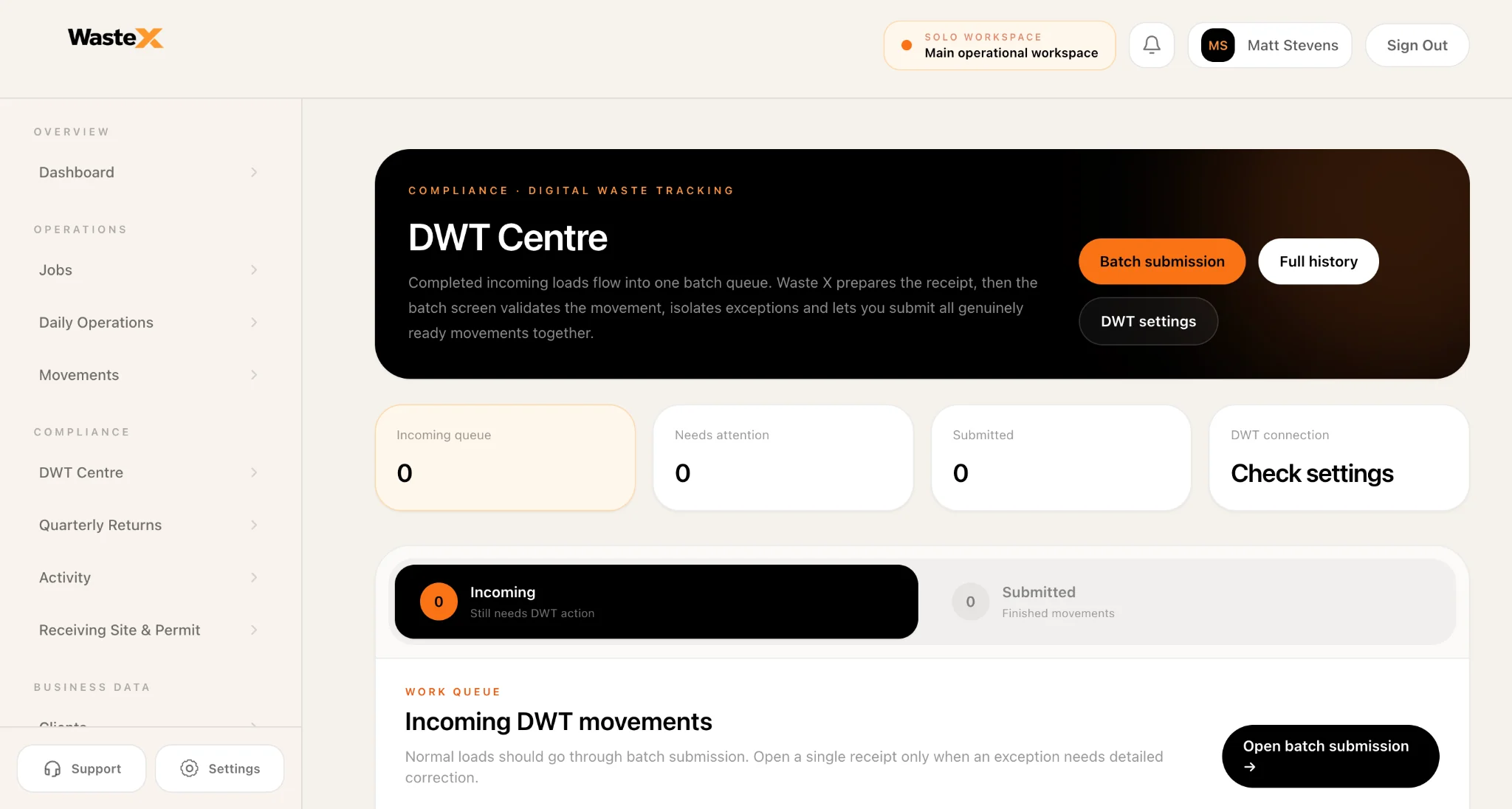
Operational receipt → DWT
Review before reporting, without rebuilding the movement.
What changes
If your organisation is licensed or permitted to receive controlled waste in England or Wales, the new Report receipt of waste service requires details of each load received to be submitted digitally.
The reporting deadline is generally within 2 working days, excluding weekends and bank holidays, starting on the day after the waste is received. Errors notified during submission also need to be corrected within the applicable reporting timeframe.
WHEN
From 1 October 2026
WHO
Permitted / licensed receivers
DEADLINE
Within 2 working days
This section summarises current GOV.UK guidance for England and Wales. Always check the official guidance for your own regulatory position.
Who needs to report
Current guidance says permitted or licensed organisations receiving controlled waste need to enter details of every load they receive, subject to the specific exceptions in the regulations and guidance.
IN SCOPE
Permitted operations, installations and mobile plants receiving controlled waste are within the receiving-site requirement.
IN SCOPE
The guidance also covers permitted sites on the same site where the waste is produced.
CHECK THE EXCEPTION
There are specific HWRC exceptions, including household waste received from residents at an HWRC in England and HWRCs in Wales.
CHECK THE EXCEPTION
A separate process exists for organisations that meet the government's digital exclusion criteria.
Sending receipt data
GOV.UK currently supports reporting receipt data using the official spreadsheet template or waste-specific software connected to the Receipt of Waste API. Organisations can use a combination of both.
ROUTE 01
Complete the mandatory fields in Defra's receipt of waste template and upload the completed spreadsheet to the service. The government template format must be used.
ROUTE 02
Compatible waste software can connect to the Receipt of Waste API and upload waste receipt records directly. Waste X is listed on GOV.UK as a compatible software provider.
How Waste X fits
The goal is to carry information forward from the real operation: booked work, movement details, driver activity and receiving-site decisions become the source for the reporting workflow.
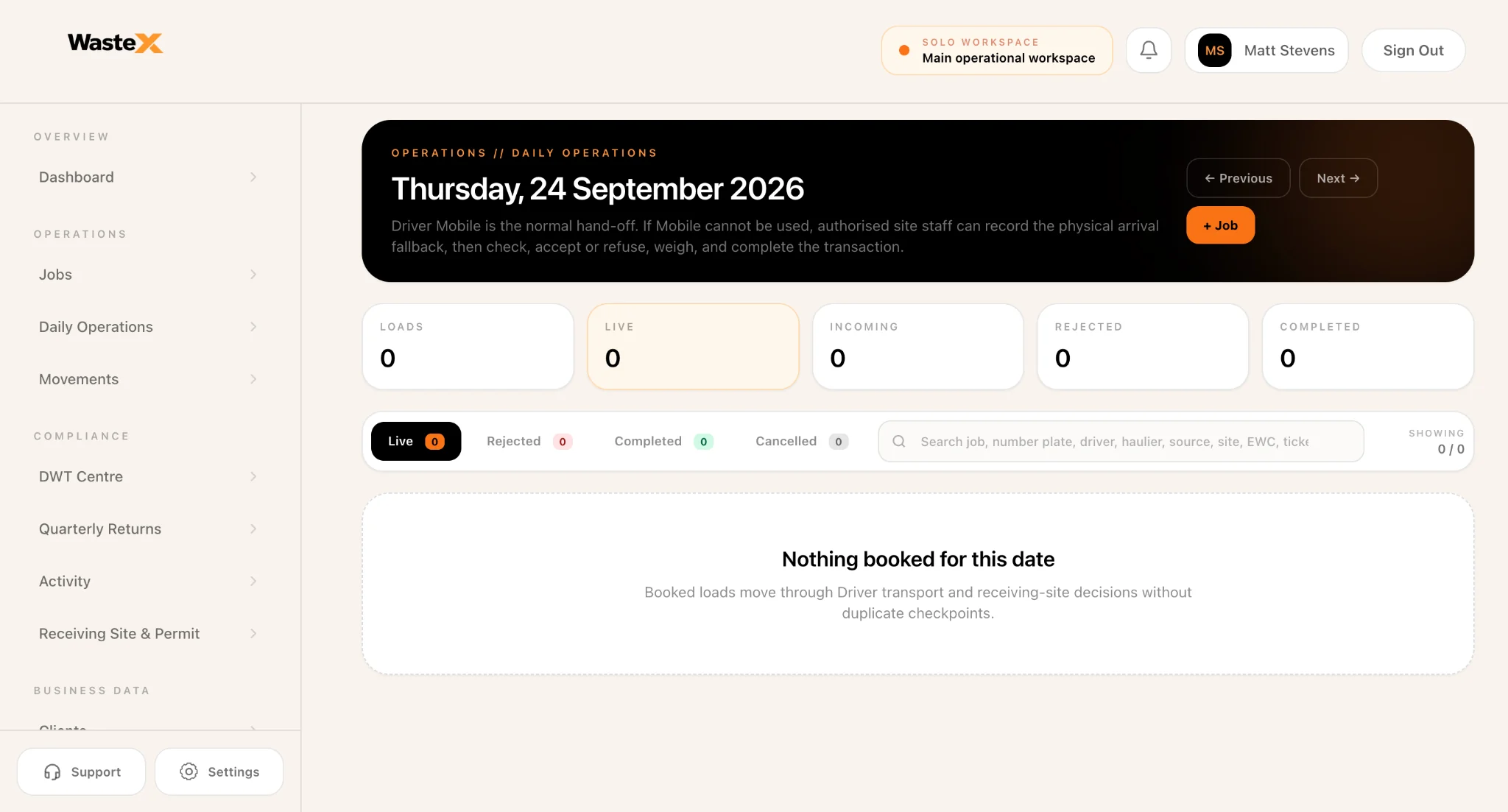
01 / OPERATION
Keep planned, live, rejected and completed loads visible while the movement is happening.
02 / DWT
Completed incoming movements can enter a DWT queue where missing data and exceptions are dealt with before submission.
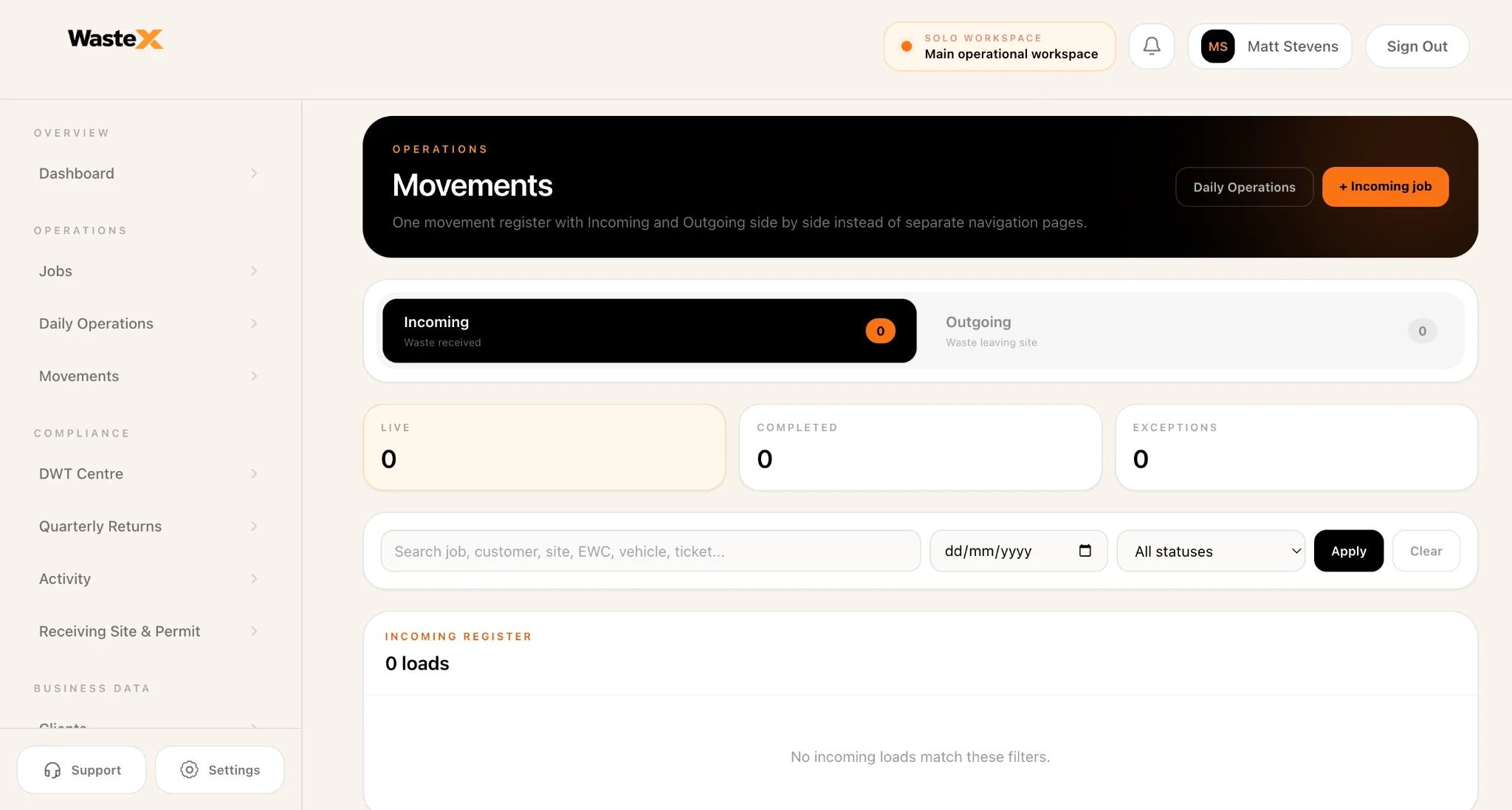
03 / HISTORY
Waste X keeps the operational movement and reporting history close together instead of creating a separate compliance record with no operational context.
What data is involved
GOV.UK points operators to Schedule 1 of the 2026 regulations and the receipt-of-waste template for the required fields. The dataset includes movement, classification, receiver and treatment context.
The information that identifies and describes the physical waste movement.
Classification information used to describe the waste being received.
Information needed to describe what will happen to the received waste.
DWT readiness
Confirm which permitted or licensed receiving operations need to use the service and which controlled waste streams they receive.
Review whether the information required for reporting is captured as part of the operational receiving workflow rather than added later.
The service supports both the government spreadsheet route and API-connected waste software. Organisations can use a combination.
Missing classifications, rejected data or operational discrepancies still need a controlled review path before the deadline expires.
GOV.UK compatible software provider
GOV.UK lists Waste X — Waste X Tracking among compatible software providers. The guidance says products used through this route must integrate with the Receipt of Waste API and pass the production approval tests required for their scope.
Inclusion on the list is not a government endorsement of a commercial product. Organisations remain responsible for choosing software that meets their own regulatory requirements.
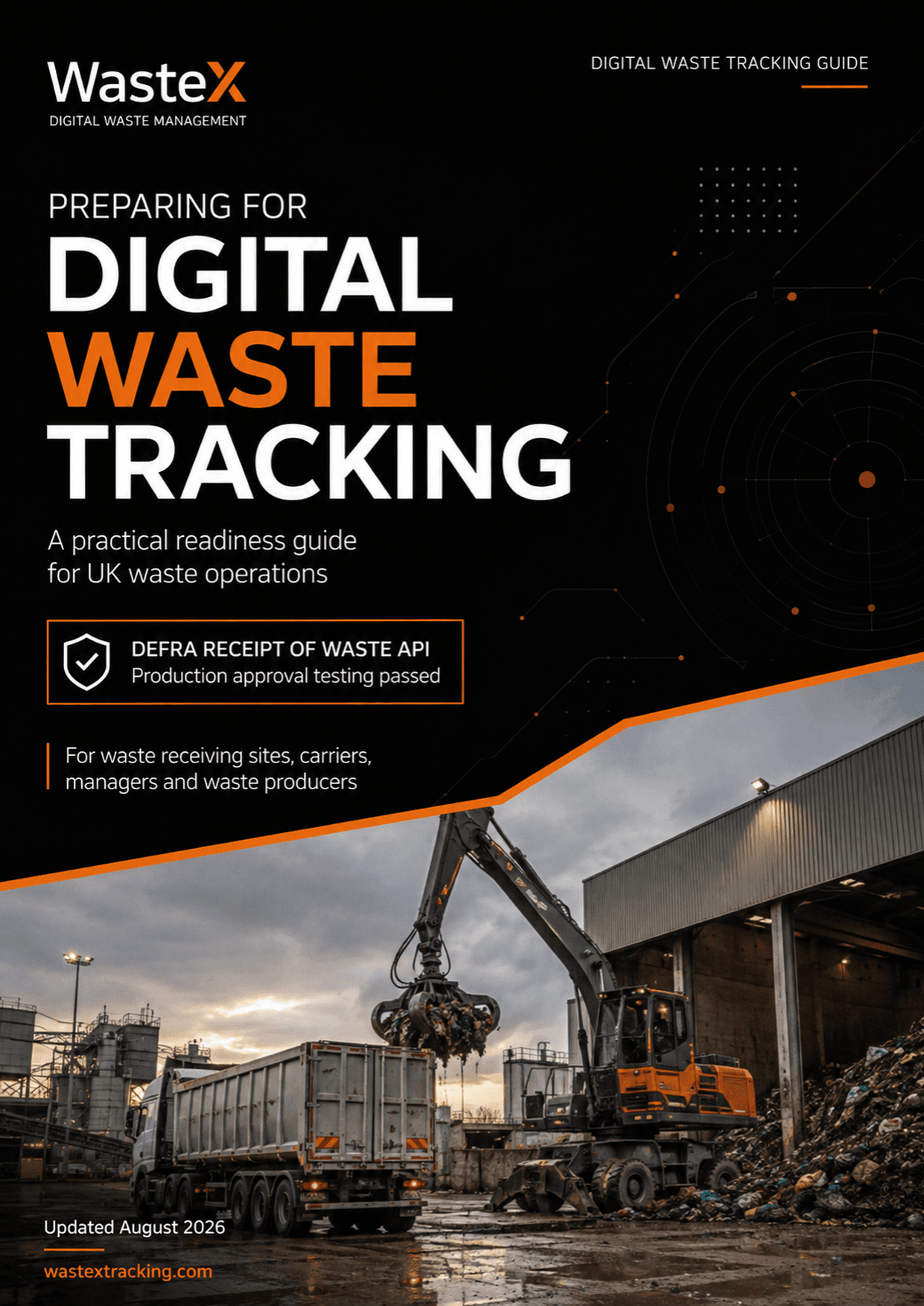
Download the Waste X readiness guide for a practical overview of the reporting shift, receipt routes, operational preparation and what receiving sites should have in place before mandatory reporting.
Digital Waste Tracking FAQ
Permitted or licensed sites receiving controlled waste in England and Wales must use the Report receipt of waste service from 1 October 2026. In Scotland and Northern Ireland, the requirement starts on 1 January 2027.
If an organisation is licensed or permitted to receive controlled waste, it generally needs to report every load it receives through the service. The government guidance includes specific exceptions, including some household waste recycling centre activity and approved digital exclusion.
For waste received in England or Wales, records must be submitted within 2 working days, excluding weekends and bank holidays. The timeframe begins on the day after the waste is received.
Yes. The government service supports submission through compatible waste-specific software connected to the Receipt of Waste API, or by completing and uploading the government spreadsheet template.
Yes. GOV.UK lists Waste X — Waste X Tracking as a compatible software provider. The guidance says compatible software for the API route must integrate with the Receipt of Waste API and pass production approval testing.
The October 2026 requirement covered on this page is specifically the Report receipt of waste service for permitted or licensed receiving sites in England and Wales. Other waste movement duties and later Digital Waste Tracking phases should be considered separately.
Digital Waste Tracking, connected to the operation